
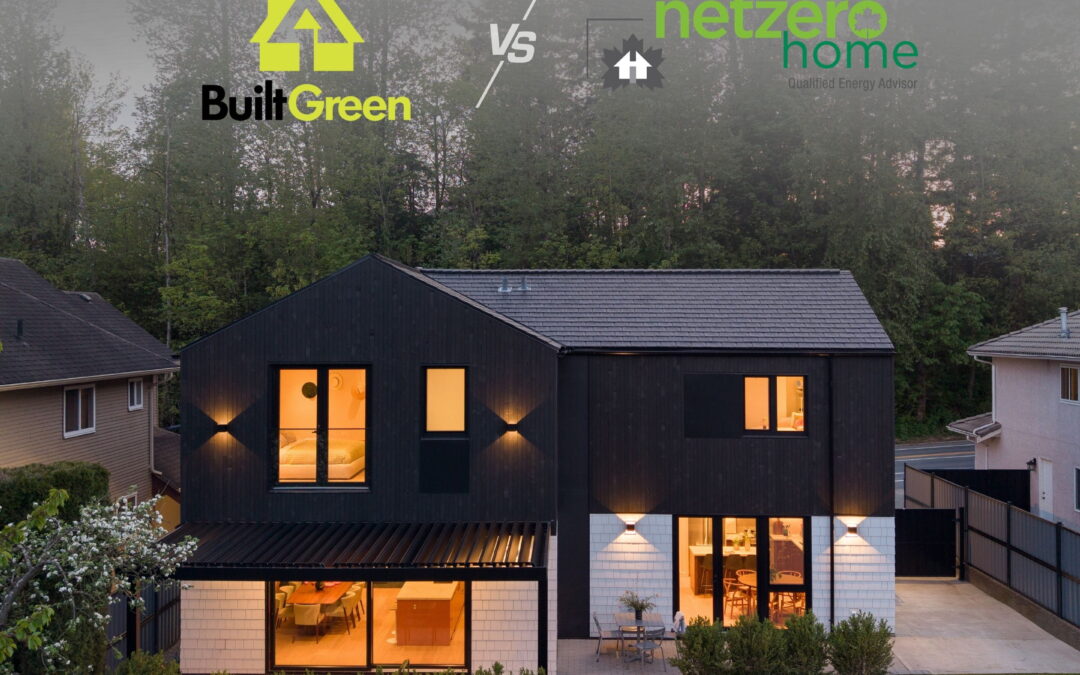
As more homeowners prioritize energy efficiency, comfort, and sustainability, builders are increasingly looking for ways to stand out in a competitive market. Two of the most recognized residential building certifications in Canada are BuiltGreen and the Canadian Home Builders’ Association (CHBA) Net Zero program.
Both programs provide third-party verification and strong marketing value, but they serve different purposes and appeal to different audiences. Understanding the differences can help you choose the right certification strategy for your business.
What is Built Green?
Built Green is a holistic certification program that evaluates a home’s overall sustainability. Rather than focusing exclusively on energy performance, it considers several categories including:
• Energy efficiency
• Indoor air quality
• Water conservation
• Resource efficiency
• Waste reduction
• Occupant health and comfort
Projects can achieve different certification levels, including Bronze, Silver, Gold, and Platinum.
For builders, Built Green offers flexibility. It allows you to choose from a menu of sustainability measures and earn points across multiple categories. This can make certification more achievable while still demonstrating a strong commitment to holistic sustainable building practices.
What is CHBA Net Zero?
The CHBA Net Zero program focuses specifically on energy performance.
To achieve certification, a home must produce as much energy annually as it consumes through a combination of:
• Exceptional building envelope performance
• High-efficiency mechanical systems
• Renewable energy generation, typically solar PV
The certification is based on verified energy modelling and testing, including airtightness testing. The CHBA also offers Net Zero Ready certification, which means the home has been designed and constructed to achieve Net Zero performance once renewable energy systems are installed.
Built Green Appeals to “Sustainability-Minded” Buyers
Built Green demonstrates that you take a comprehensive approach to sustainability. It resonates with homeowners who care about healthy materials, waste reduction, indoor air quality, and overall environmental impact.
For builders, it shows a commitment to responsible construction practices beyond energy efficiency alone.
Net Zero Appeals to “Innovation-Focused” Buyers
“Net Zero” is one of the most recognizable terms in the residential construction industry today even though it means different things for different people. While homeowners may not fully understand the technical requirements behind the certification, many associate it with solar panels, cutting-edge technology, lower utility bills, and a forward-thinking approach to homebuilding.
For builders, it shows a commitment to pushing beyond minimum energy code requirements and building homes that are designed with solar panels.
For builders working in the City of Vancouver, the City currently offers a density bonus of up to 19% additional floor area for eligible Net Zero projects. This means Net Zero certification can support both marketing objectives and project economics. The combination of additional floor area, lower operating costs, and strong sustainability credentials can make Net Zero an attractive option for projects in Vancouver.
Do You Have to Choose One?
Not necessarily. Many builders pursue both certifications to maximize market differentiation and demonstrate leadership across multiple sustainability categories.
One example is the Phoenix House, a project that achieved both BuiltGreen Energy+ and CHBA Net Zero certification. By combining the strengths of both programs, the project demonstrated exceptional energy performance while also meeting broader sustainability objectives. It won the 2026 BuiltGreen Maverick Award and multiple embodied carbon and LCA awards.
At Carbon Wise, we’ve worked with builders and homeowners on both certification pathways and have helped projects successfully navigate the requirements of each program.
Which Program Is Best for Your Business?
If your goal is to demonstrate an overall commitment to sustainable building practices, Built Green may be the right fit.
If you want to position yourself as a leader in high-performance construction and energy efficiency, CHBA Net Zero may be the stronger branding tool.
For many builders, the best answer is a combination of both. The right strategy depends on your target market, your construction practices, and the story you want your brand to tell.
Ready to Explore Certification for Your Next Project?
Whether you’re considering Built Green, CHBA Net Zero, or both, our team can help you evaluate the options and determine the best fit for your project and business goals.
Contact Carbon Wise today to discuss your next project and learn how certification can help differentiate your brand in an increasingly competitive market.